Showing posts with label seasons. Show all posts

Friday, July 23, 2010

Lassi Delights


Lassi is a traditional South Asian beverage originating in the Punjab region of Northern India that is made by blending yogurt with water, salt, and spices until frothy.


Yogurt sweetened with honey is used in rituals. Traditional lassi is sometimes flavored with ground roasted cumin. Sometimes a little milk is used and is topped with a thin layer of malai, a clotted cream.


A tangy sweet-sour concoction and it is drunk year round, but is most popular during the torment of summer. Lassi beverages are often served chilled during periods of hot weather.


A more recent evolution of lassi drinks is the sweet lassi. Flavored with sugar, rosewater, mango, strawberry or other fruits, sweet lassi drinks have become particularly popular in Indian cuisine restaurants throughout the world. These tasty drinks are also usually topped with chopped maraschino cherries, cashews, and fresh shredded coconut.


Here is a recipe of the Mango Lassi:

Ingredients:

# 1 cup plain yogurt
1/4 cup milk
1/4 cup water
1/2 cup mango pulp (fresh or canned)
1 cup crushed ice
3 table spoons sugar or honey
25 gm ground pistachios (optional)
A dash of ground cardamom (optional)
3-4 mint leaves (optional)


Method:

1. To make the mango pulp at home select mangoes those are so ripe that the skins look a bit wrinkled. Squeeze the mango by rolling it gently but thoroughly between your hands. Cut off the tip where the fruit comes to a point. With firm and steady pressure squeeze the juice into a mixing bowl. Some juice can be extracted from the pit but do not allow any fiber.

2. In a pitcher or blender, combine the yogurt, milk, water, mango pulp, sugar and cardamom.

3. Whisk briskly until completely mixed. Serve in tall glasses that are filled with crushed or broken ice pieces.

4. Sprinkle the ground pistachios and a little cardamom over the top. Serve chilled.


Here is a recipe of the Sweet Lassi:

Ingredients:

# 1 cup of yogurt or combination of half yogurt and half buttermilk
1/2 a cup of water
1/2 cup of ice cubes
3-5 tsp of sugar or your choice of sweetener to taste
Pinch of salt
Few drops of edible rose water (optional)
Dollop of plain yogurt for garnishing


Method:

1. Beat/churn the yogurt or buttermilk-and-yogurt mixture with the water.

2. Add the sweetener till it becomes smooth (till it is frothy).

3. Pour in tall glasses filled with crushed or broken pieces of ice. Add a few drops of optional rose water and stir before serving. Add a dollop of fresh yogurt on top. Serve chilled.

Here is a recipe of the Salty Lassi:

Ingredients:

1 tsp cumin powder
1 cup plain yogurt or combination of half yogurt and half buttermilk
1 cup chilled milk
2 tsp lemon juice
1/2 to 1 tsp salt
1/2 cup of ice cubes
Dollop of plain yogurt for garnishing


Method:

1. Combine the yogurt or yogurt-and-buttermilk with water in the blender.

2. Add a bit of cumin powder and salt. Serve in tall glasses that are filled with crushed or broken ice pieces. Top it up with a dollop of yogurt. Serve chilled.


Lassi is an ancient drink that is quick and inexpensive. Indian summers are never complete without the regular dose of different lassis available here.

. . .

Tuesday, October 20, 2009

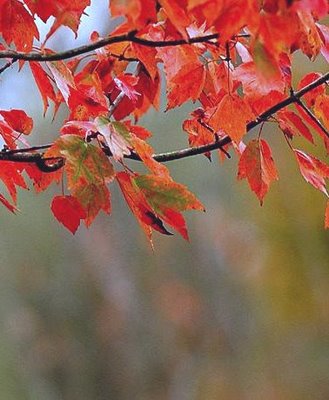
Autumn in my Heart


leaf-flames lighting the air,
pirouetting wildly in the gentle winds.
the heart filled with music,strumming the notes of nature,
the mind dances in crimson silk, wearing crowns of silver-frost
the body sways, to the rhythms of the autumn raaga…

. . .

Thursday, August 13, 2009

Monsoon Romance


Monsoon - there's magic in the word. The monsoon, of all the seasons, has been a source of inspiration to poets.


Dark clouds hovering in the sky over a scenic beach with coconut palms swaying in the rainy breeze is the usual picture on a postcard or advertisement for a tourist destination.


Every dark cloud has a silver lining. There is thunder, there is lightning, heavy rains and human emotions in response to all this.


Singing the hissing tunes, she dribbles on our roof, trickles on our window panes.


In India it is usually associated with romance, rejuvenation of life and joy. Monsoon evokes a sense of freedom, romance and intimacy in our heart mind and soul.


It is the moment of madness, when love seeks love and life knows no death, and the music of the monsoon, the dance of the rain overwhelm our hearts.


There's something about the rains and romance. When you think of the rains, images conjure up about your loved one, who may be by your side at the time or may be far away from you, and you just can't stop thinking about him or her. 


The intoxicating smell of sprouting leaves, crisp air and lots of fun, not to forget dark ominous clouds rolling across the sky.  All the trees look so green and washed and the water glistening on the leaves looks like beads of pearls shining on the leaves.


The monsoon brings with it a feeling of love, longing and romance. There's romance in it, there's life in it.

. . .

Monday, May 4, 2009

Monsoon Wedding


The gentle body swings to the sound of rains,
drifting in exuberant motion to the thrill.
The ocean tide rolls and slides onto the shore,
glistening in its reflected joy of monsoons.

The cloud imperceptibly transforms 
its multi-dimensional halo of light,
entrancing the souls of lovers and dreamers.
A dove fluttering to build her spring nest,
cooing the mysterious music of birth.

The throbbing heart of the expectant lover,
hovering in eager longing 
for the appearance of her delayed beloved.
Their scuttling frantic thoughts 
of the mind trapped in desire,
ensnared outside reason and wisdom, 
running away from themselves.

All these tremulous waves of expanding motion,
whirling, trembling, wandering, writhing, drifting.
Shadows of the intricate weaving dance,
lightly moving to the music of ecstasy.

. . .

Thursday, November 27, 2008

A Kiwi Summer


The kiwi fruit, often shortened to kiwi in many parts of the world, is the edible berry. Also known as the Chinese gooseberry, the fruit was renamed in the 1950s; briefly to melonette, and then later to kiwifruit. Originally known as yang tao, it is the national fruit of China.


The fruit makes for a heavenly topping for tarts, cakes and even salads. It can tenderise other foods such as salads and meat.


Here is a recipe for the Kiwi Fruit Smoothie:

Ingredients:

9 kiwi fruits, peeled
4 cups pineapple juice
4 peaches, peeled and frozen
1 frozen banana
8 large strawberries
3 handfuls of spinach
8 ice cubes
2 cups sparkling water
1/4 cups powdered sugar
1/4 cups frozen limeade concentrate
1/4 teaspoons coconut extract


Method:

1. Peel the kiwis and cut into small pieces.

2. Place half in a blender with 2 cups juice and 4 ice cubes.

3. Blend until smooth. Stir in 1 cup sparkling water.

4. Repeat with the remaining kiwis, 2 cups juice, 4 ice cubes, and 1 cup sparkling water.

5. Pour into tall glasses and garnish each with a strawberry/ kiwi.


Kiwis are one of the best ways to beat the summer heat. This drink is screaming with chill and freshness, making it perfect for summer evenings or summer spring parties. The Kiwi smoothie is light and refreshing and a cool fruity mix of kiwi's, strawberries and pineapples. Added to that the refreshing hint of mint and we have a fantastic drink..

. . .

Tuesday, August 12, 2008

Autumn Songs


The autumn has arrived with a charming bloomed lotus as her face, emboldening the heart-pleasing face of a new bride, and the autumnal fields of white grass with whitish flowers as her cover. The amorous clucking of swans that have just returned from the lakes, as rains have gone, are the jingling anklets of autumn.


Blanched is the earth with whitish grass and the nights with silvery coolant moonbeams of the moon, and the rivers with white swans, lakes with white-lotuses, and that forest up to its fringes with whitish jasmine flowers, the seven-leaved banana plants sagging under the weight of their flowers and now the paddy is ready to ripe with the tenuous stalks of rice with their necks a little bent down.


The wind is now wiggling the well-ripened rows of rice stalks, curvy under the weight of their cobs, and the trees sagging under the weight of their flowers, wobbling the fully bloomed clumps of lotuses in the lakes, and wriggling the hearts of young men and women, with a lilting breeze and lively freshness.


The rivers are journeying slowly with a strutting of prideful lovely girls, for the raising and falling fishes of rivers seem to be the delightful sets of strings at the waistlines of rivers. The white waterfowls on riverbanks look as the whitish pearly pendants of rivers, like the pearly pendants around the bosoms of prideful girls.


The autumn makes the rivers placid and pure, the rows of ripples of their water are pecked with the beaks of partridges for their feed, flocks of cranes and drakes are bustling, and the rivers themselves are reddened with the red-pollen grains of red-lotuses.


The limpid waters of lakes are refurbished with bevies of couples of voluptuous swans, amongst the just bloomed white and blue lotuses, the rows of ripples of lake-water are undulated by the oncoming slow morning breeze.
.

The earth is delightfully inscribed with the vermilion colour of safflowers that has flowered up to the visible horizon, and the swaths and ravines of earth are surrounded with charming lotuses, the slothful wind is stirring up the branches of red-golden coloured trees, with peaking tender leaflets, and mushily outcropped flowers, from which nectar is trickling, drunk by the honeybees, and the heart raven in the sylvan scenery dances in ecstasy.


With clouds that have doled out their waters, they look like the whitish conch shells moved by the speed of wind, splintered into hundreds of pieces and journeying away, the sky blooming with swerving, splintering, and silvery clouds.


The autumnal night, is wearing clusters of twinkling stars as her jewellery, as the veil of a damsel will be unveiled frequently presenting her face, clouds on the skycap are unveiling to present the immaculate moonshine and the uncountable medley of stars.


The moon is heart-stealing with its profuse lightbeams, and is the real gladdener. The sprinkler of fresh and coolant dewdrops through those moonbeams, with the burning bodies of the women, full of desire and lusting after their itinerant lovers, this season is outmoding the most famous beauty of the nature, namely the womenfolk.


The dawn breeze spreads coolness, and sifting the dewdrops that are clinging at the edges of leaves, the auroral breeze is exhilarating. The fragrance of flowers of white-flower trees and the birds in fine fettle are calling each other reciprocally, steals the heart. Thus this autumn is heart-appeasing with the brilliance of its lotuses and the moonbeams.


Let this very season bring utmost delight to all of your hearts, like your fervent and lustful lovers with their visages like autumnal lotuses, with their whitish wraparounds like the silken white grass flowers of autumn, and let them be romantic, like this romantic autumn season...

~[KALIDASA]~
. . .

Monday, June 16, 2008

Mango Showers


It’s the season of summer, when the sweet scent of mangoes fills the air. When the first wooden crate appears in the market, each greenish yellow fruit neatly stacked amidst bundles of hay, it means only one thing. It is a love affair long before we knew what love was. They are golden, dripping with a heavenly juice, fleshy and aromatic.

Every shop is stacked with crates and crates of them, and people everywhere slice and slurp their way to mango ecstasy. Mangoes are the most consumed fresh fruit in the world! Our love for this fruit is evident in its prevalence in folklore and anecdotes. Cutting across space and time, the mango makes its presence felt with myriad names that tell juicy tales.

Known for its sweet smell, and even sweeter taste, mangoes are a perfect fruit for a romantic interlude. Its nostalgic reminiscing the good old days when kids tried to sneak in and steal the fruit and couples would romance each other under the trees.

Come summer and the beautiful mango tree is in fragrant bloom with promise of rich rewards of ripe succulent mangoes. The ‘koyal’ (cuckoo) whose summer abode is the mango tree, sings in her shrill voice everyday. The first thing which comes to everyone’s mind in this season is the mangoes, the king of fruits. Those ripe juicy mangoes in different shapes and sizes which make everyone’s mouth water.

A visit to an orchard is a magical sight for any kid. The charming flowers of mango trees are with delightful thick buds, and they are overly swilled by tipsy honeybees with slow breezes flurrying and tilting their delicate leaflets. Delightful are the branches of mango trees that are laden with bunches of coppery tender leaves, and with just flowered flowers, and with their heads a little bent down.

After some time trees and trees laden with the fruit in vibrant shades of green and yellow is a sight to behold. After a long wait (or so it seems) they would be served in all their golden glory, plump, juicy and begging to be eaten. As strong winds start blowing children would run from one mango tree to other collecting fresh mangoes that would keep falling all day. It is just like a mango shower.

Almost every child growing up remembers climbing mango trees or aiming a slingshot at a neighbour's tree laden with fruit; some even have battle scars to show, bruises received from tumbling down branches or being chased by an irate gardener.

The tantalizing fruit turned even ethical kids into mango-thieves, furtively picking up the fallen fruit. There remain only a sorry few people who haven’t managed to try to climb a mango tree to steal some fruit, or take aim with stones to knock down some mangoes from a neighbor’s tree, only to hit the neighbor’s window instead, and then make a desperate run to escape the neighbour’s wrath.

People’s mango preferences depend on mood and moment. The first batch of juicy fruit is generally eaten sliced. By the second or third week everyone begins to hanker for a change, so in comes different forms of desserts. As time progresses this mangoes are then used to make breakfast or teatime treats. When the sweetness has gotten overwhelming for even a staunch mango lover, spicy relishes would be introduced in the meals.

And there have been few other fruits that have captivated the hearts, minds and tongues of the majority of the world’s population. It has a universal appeal and grows from ground level to an altitude of 5000 feet. This fruit of the Maharajas, Badshahs, Kings and Viceroys, has always been the fruit of the common man as well.

In India, Mangoes have been cultivated in India from time immemorial and are found in plenty during the summer season with over 100 varieties of mangoes, in different sizes, shapes and colours. There must be as many types of mangoes in India as there are languages.

Each region has its own unique breed of mango, and regional pride insists that their mango is better than their neighbors’ mango. The perfumed Alphonsos, the green Dasheharis, the parrot beaked Totapuris, the orange beauty Baiganpalli, the succulent Chausas and the golden skinned Langdas, gleaming in their jewel tones - red, yellow and dark green with their own distinct aromas.

The mango is no ordinary fruit; Mangoes happen to be native to the subcontinent, and over the millennia have woven themselves intricately in to life and culture. The Mango tree plays a sacred role in India. A string of mango-leaves are tied across doorways, as an auspicious symbol on auspicious and religious occasions, and are included into many of the associated rituals. This fruit is very much a part of our festivals and the songs we sing.

Jewelers design intricate ornaments (earrings or necklaces) with mango designs. The mango leaf or fruit is a common design found on mangalsutras that wives wear. The beautiful mango is the inspiration for the ageless Indian motif, the ambi that weaves its way into sarees and other textiles. Wedding feasts aren’t complete without mango chutney or pickle. The tree and its fruit are symbols of fertility and abundance, love and devotion and some believe that the Mango tree can even grant wishes.

Mangoes are a short lived fruit. Many Indians have found a better way to taste it throughout the year. Green unripe mangoes are pickled in many different ways, to be drawn out in other months, to be relished.

To bite into a mango and get that sweet, sticky juice squirting all over your chin and clothes is to drift back into blissful childhood, into days that seemed to have no beginning and no end. Life then was in the here and now, and there was great joy in being alive in the blazing sun, in close friendships, in whiling away hours doing absolutely, gloriously, nothing.

The mango still has such a magnetic hold on today’s generation. It is so much more than a mere fruit. It represents a rite of passage, a time of giddy childhood, of endless summer days and life stretched into infinity - an unending field of gold, an abundant orchard of luscious mangoes dangling from countless shady trees…


...and to quench your mango thirst out of some juicy ripe mangoes visit here.
. . .

Friday, January 11, 2008

Pitha: Steamed Dumplings


As the chilly air blows around, stoves are lit all over and the atmosphere fills with the aroma of the season's delicacies, the delicious tender Pithas (rice-cakes).


No, you don’t have to wait for winter to arrive to savor these dessert delicacies of Bengal and some other eastern parts of India as these can be made and devoured any time of the year but as tradition has it, pithas are mainly made in the winter months, at the completion of harvesting, to celebrate the harvest festival of the new crop, called the Nabanna.


These festivities start from the month of November to mid December (aghrayan) and continue to from a part of the Poush Parbon (makar sankranti), the festival of the month of Poush (mid December to mid January). Climatic conditions favor one of the harvests to be held at the end of the monsoons and at this time of the year.


In India, pithas have always had an innate relationship with the winter season. Even a few years back, the pitha culture was limited only to the villages and rural areas of the country. Now this olden-day tradition has found its way out of the villages and the pitha culture has been revived in the urban areas. Nowadays pithas can be found all over, from mum's electric stove to supermarket shelves.


Pithas are cakes essentially made of rice or rice flour and in some preparations, made with wheat flour. Rice or wheat usually goes into the preparation of a pouch (khol), which are stuffed with fillings (pur) of grated coconuts and sometimes stuffed with sweetened vegetables. These pouches may be of different shapes – oval, oyster and flat shaped ones are the most common ones.


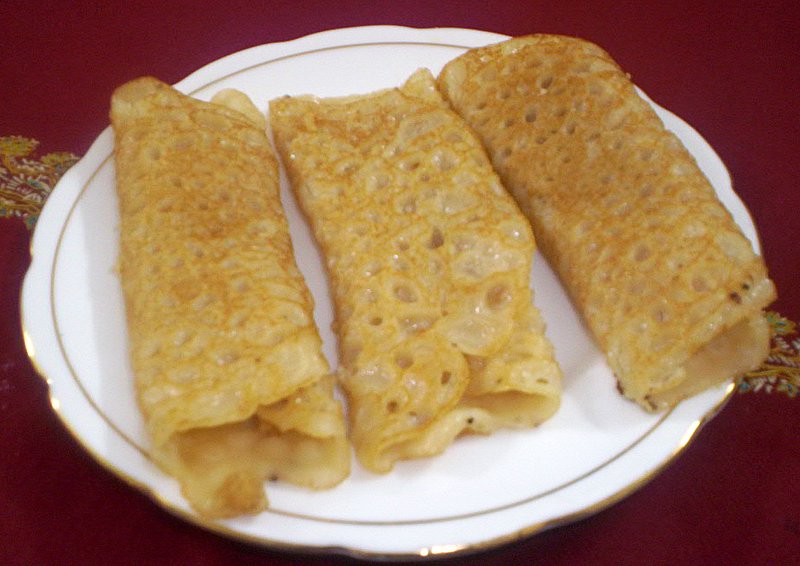
Generally, these pithes are fried (pakan pithe) or steamed (bhapa pithe). Dumplings, called puli pithe also feature among the different varieties, which include muger pulli, dudh pulli and chandrapulli. Another exclusive dessert is the patishapta, which contains sweet kheer as filling.


Some recipes use jaggery, date fruit juice or palm syrup to sweeten these pithas. Often different ingredients and spices like cashew, pistachio, cardamom and camphor are added to top up the flavor. The sweet pitha sometime go additional treatment with milk, in a payesh kind of preparation which is called the dudh pulli. These are probably the most popular sweet with the Bengali's only second that to rasogolla.


Here is a recipe of the Steamed Pitha:


Ingredients:
(10 servings)

# 500 gm rice or freshly pounded rice flour .
100 gm grated coconut
200 gm molasses (patali gur)


Method:


1. Wash and soak rice in 6 cups of water for 60-120 minutes. Drain water and spread rice in the colander, keep for 30 minutes, pound and grind rice to make flour. Sift the rice flour.

2. Assemble one small round bowl of 8 cm diameter, 3 cm deep, a piece of cotton cloth measuring 25 square centimeter, a small but deep saucepan (steamer) with a lid and a strainer that can be fitted on the saucepan.

3. Boil some water in the saucepan placing the strainer on it. Add salt to the rice flour and sprinkle some lukewarm water just to moisten the flour. Sift the flour again.

4. Spread 1 cup of rice flour lightly in the small cup. Place 1 tablespoon molasses at the center. Sprinkle 2 teaspoons coconut over it. Cover the molasses and coconut by spreading another 1 cup of rice flour in the cup. Spread a wet cloth on the cup. Gather the four corners of the cloth with the cup inside. Hold the cloth with the cup tightly keeping the cup upside down.

5. Place the cup with the cloth keeping it upside down in the strainer fitted on the saucepan. Uncover the cup and remove it carefully from the pitha.

6. Gather the corner of the cloth again and cover the pitha with it. Put lid on the saucepan and steam for 2 to 3 minutes.

7. Holding the cloth remove pitha from the strainer. Serve hot pitha at breakfast.


Here is the recipe of Patishapta:
(6 servings)

Ingredients:

180 grams grated fresh coconut
2 cups rice flour
3 tablespoons milk powder
100 gm molasses or sugar
1/4 cup sugar
1 tablespoon ghee


Method:

1. Dissolve molasses or sugar in 2 cups of water. Add rice flour and mix well, batter should be moderately thin. If necessary add a little water. Keep for 2-3 hours.

2. For the filling, mix the entire grated fresh coconut, molasses and the milk powder. Heat 1 tablespoon ghee in a pan and fry the above mixture just for 30-60 seconds and keep it aside.

3. Now, Heat the frying pan, pour in 1/4 cup of batter. Move the pan so that the batter spreads all over it. Reduce heat. When pan cake dries up place I tablespoon prepared filling at one edge.

4. Roll on the pancake. With the back of a serving spoon press the roll lightly. When sticky remove from heat. Serve as a dessert or in the breakfast.


Pithas are usually enjoyed with the sweet syrups of khejurer gur (jaggery made of dates). It is often said that the tradition of pitha is under threat with the burgeoning popularity of fast food. Being able to relish hot scrumptious pithas, while shivering in the early morning chilly mist of the countryside, is a completely different experience.


. . .