Showing posts with label recipes. Show all posts

Tuesday, March 9, 2010

Green Tea


Tea consumption has its legendary origins in China of more than 4,000 years ago. Green tea originates from China and has become associated with many cultures in Asia.Green tea has been used as both a beverage and a method of traditional medicine in most of Asia, including China, Japan, Taiwan, Vietnam, Korea and Thailand, to help everything from controlling bleeding and helping heal wounds to regulating body temperature, blood sugar and promoting digestion.


Steeping is the process of making a cup of tea; it is also referred to as brewing. Generally, two grams of tea per 100ml of water, or about one teaspoon of green tea per five-ounce cup (150ml), should be used. With very high quality teas like gyokuro, more than this amount of leaf is used, and the leaf is steeped multiple times for short durations, two or three steeping typically. The steeping technique also plays a very important role in avoiding the tea developing an overcooked taste. Preferably, the container in which the tea is steeped or teapot should also be warmed beforehand so that the tea does not immediately cool down.


Here is a recipe for Iced Green Tea:

Ingredients:

2 cups boiling water
4 regular green tea bags / tea leaves
3 inches fresh ginger, peeled and thinly sliced
1 cup cold water
1 cup white grape juice (chilled)
2 tsp sugar / honey (optional but no-calorie artificial sweetener)
3 tablespoons of squeezed lime juice
Ice Cubes


Method:

1. In a saucepan, combine water, sugar, and ginger. Bring to a boil and reduce heat. Simmer for 5 minutes and remove from heat. Then add the tea bags, let stand covered for 3 minutes. Remove the tea bags, then strain and discard the ginger.

2. Remove tea bags from water, squeezing gently.

3. Stir in 2 cups cold water, white grape juice, lime juice and sweetener, stirring until sweetener dissolves.You can also add 4 drops of peppermint oil.

4. Serve over ice or let tea come to room temperature then serve over ice. If you like garnishes, feel free to add some lime wedges to your drink.


Green tea diet beverages were formerly brewed much like traditional hot tea is used today. Sometime this brewed diet tea was served hot, while other times it was served chilled with ice.

. . .

Wednesday, March 3, 2010

Potato Cutlet


A popular fast food all over the world across cultures the croquette is a kind of fried food stuffed with minced meat or vegetables and sometimes mashed potatoes, cut into breadcrumbs, rolled into a cylinder or disk, and then deep-fried. The croquette gained a world-wide popularity both as a delicacy as well as an easily produced fast food.


In India, it is known as the Alu-tikki (Potato Cutlet) or the Alu-chop in Bengali which is a common potato filled croquette served throughout the place, primarily as a snack. It is very famous in North India, served with a stew; mostly served as snacks at home and is also popularly sold by road-side vendors. It is readily available and quite cheap, with a variety of choices.


No street is without its very own line of stalls or hawkers selling these food items. Although the hygienic standards involved in the preparation of these foods may be questionable, the variety and textures of the foods on offer are certainly interesting.


Sometimes it is called cutlet and eaten just like that or a fast food variation is inside a hamburger bun (like a vegetarian burger).The Bengali chop varies from the Anglo-Continental croquette only in being spherical rather than cylindrical . In Bengal the variation of these cutlets include the Alur Chop, Chingrir Chop (Shrimp & Potato Chop), Bhetki Chop (a very popular fish in Bengal), Beguni (stuffed with bringal slices), Egg Chop, Mochar Chop (Banana Flower Chop) and many others and is mainly served with fried-rice.


Here is a recipe of the Alur Chop / Alu Ki Tikiya (Potato Cutlet/ Croquette):
Serves: 4 to 6 (makes 18-24 cutlets)


Ingredients:

# 4-5 Potatoes, peeled, boiled, mashed and allowed to cool
1 cup finely chopped onion
1 tsp turmeric powder
2 tbsp of oil
1 tsp chopped garlic
1 tsp chopped ginger
1-2 green finger chillies
1/2 tsp ground cumin
1/2 tsp ground cloves
1/2 tsp ground cinnamon
1 tbsp white vinegar
1/2 tbsp mint leaves, finely chopped
1/2 bunch fresh coriander leaves, finely chopped
1 cup fine dry bread crumbs
Salt and pepper to taste


Method:

1. Bring a large pot of water to a boil and add 1 tablespoon of salt and the potatoes. Cook until tender. Let cool slightly, then peel and mash the potatoes until smooth. Season with one-half teaspoon of salt and a dash each of pepper and turmeric. Set aside.

2. Cook the onion in 1 tablespoon of oil in a saucepan and fry until golden brown. Mash the chopped garlic and then the chopped ginger into paste. Add the garlic and ginger paste to the pan and cook for a minute.

3. Chop the green chillies and coriander leaves and add the other ingredients to the mixing bowl with the vinegar, turmeric and seasoning.

4. Use your hands to mash the potatoes, mixing the lovely masala mixture in. Shape the potatoes into 3-inch balls. Form each ball into a cup. Flatten to form round cakes or "chops." Lightly coat with bread crumbs.

5. Heat one-half cup of oil in a shallow skillet. Add the potato chops and fry until golden brown all around. Remove them to paper towels to drain and then arrange on a serving platter.

Enjoy with salad and a selection of sauces or pickles. You can also add other assortments of vegetables, fishes or meat to the mixture. Just let your imagination fly.


The different chops are important items in everyday life which makes Indian Street Food so unique and tasty.
. . .

Saturday, January 9, 2010

Orange County


The sweet orange does not occur in the wild. It is believed to have been first cultivated in southern China, northeastern India, or perhaps southeastern Asia. Italian traders have introduced it to the Mediterranean area around  1450 and then Portuguese navigators have been credited with bringing orange trees to the Mediterranean region around 1500. 


After introduction of the sweet orange, it was quickly adopted as an edible fruit; it was so highly regarded that wealthy persons grew oranges in private conservatories, called orangeries. 


Portuguese, Spanish and Dutch sailors planted citrus trees along trade routes to prevent scurvy. On his second voyage in 1493, Christopher Columbus took the seeds of oranges, lemons and citrons to Haiti and the Caribbean. Many orange groves were established by grafting the sweet orange onto sour orange rootstocks.


The orange blossom, is highly fragrant and the petals are an important component in the making of perfume, rosewater for food items. It is  traditionally associated with good fortune and has long been popular in bridal bouquets and head wreaths for weddings. Fallen blossoms are also dried and then used to make tea.


Orange blossom honey is produced by putting beehives in the citrus groves during bloom, which also pollinates seeded citrus varieties. Orange blossom honey is highly prized, and tastes much like orange.

Here is a recipe for simple Orange Juice:

Ingredients:

4 Oranges
4 Ice cubes (optional)
Mint leaves or thin orange slices, for garnish (optional)


Method:
Lightly smack each orange on the counter. Cut each one in half. Squeeze into a glass. You may also use a citrus reamer to do this. If you want less pulp, use a hand juicer with a strainer. 

Here is a recipe for Orange Smoothie:

Ingredients:

2 cups fresh squeezed orange juice
1/4 cup pineapple
1/4 cup milk / young coconut milk
1/2 cup of natural yogurt
1 banana
# 3 ice cubes
Mint leaves or thin orange slices, for garnish, optional


Method:

In a blender, whip the orange juice, pineapple, yogurt, milk and banana until smooth. Serve in tall glasses, garnished with an orange slice and mint leaf, if desired.


Orange juice is a a vital element of your breakfast and a popular beverage made by extraction from the fresh fruit, by desiccation and subsequent reconstitution of dried juice, or by concentration of the juice and the subsequent addition of water to the concentrate. Orange juice containing pulp seems to be more nutritious than other varieties due to the flavonoids contained in the pulp. Orange juice should always be fresh squeezed to get the best out of it.
. . .

Thursday, November 27, 2008

A Kiwi Summer


The kiwi fruit, often shortened to kiwi in many parts of the world, is the edible berry. Also known as the Chinese gooseberry, the fruit was renamed in the 1950s; briefly to melonette, and then later to kiwifruit. Originally known as yang tao, it is the national fruit of China.


The fruit makes for a heavenly topping for tarts, cakes and even salads. It can tenderise other foods such as salads and meat.


Here is a recipe for the Kiwi Fruit Smoothie:

Ingredients:

9 kiwi fruits, peeled
4 cups pineapple juice
4 peaches, peeled and frozen
1 frozen banana
8 large strawberries
3 handfuls of spinach
8 ice cubes
2 cups sparkling water
1/4 cups powdered sugar
1/4 cups frozen limeade concentrate
1/4 teaspoons coconut extract


Method:

1. Peel the kiwis and cut into small pieces.

2. Place half in a blender with 2 cups juice and 4 ice cubes.

3. Blend until smooth. Stir in 1 cup sparkling water.

4. Repeat with the remaining kiwis, 2 cups juice, 4 ice cubes, and 1 cup sparkling water.

5. Pour into tall glasses and garnish each with a strawberry/ kiwi.


Kiwis are one of the best ways to beat the summer heat. This drink is screaming with chill and freshness, making it perfect for summer evenings or summer spring parties. The Kiwi smoothie is light and refreshing and a cool fruity mix of kiwi's, strawberries and pineapples. Added to that the refreshing hint of mint and we have a fantastic drink..

. . .

Sunday, June 22, 2008

Cherry Berry


Romans discovered the sweet cherry fruit in the Asia Minor in about 70 BC. They then introduced them in the first century AD to Britain. The German word Kirsch-the cherry liqueur comes from the word karshu. This is the name given to the cherries that were first cultivated in Mesopotamia in 8 BC. 


Tart cherries, enjoyed as dried and frozen cherries and cherry juice, have among the highest levels of powerful antioxidants compared to other fruits. They also contain other important nutrients such as beta carotene, vitamin C, potassium and fiber.


Since the cherry fruit bruises easily, you need to handle them with care. When buying cherries, look for a bright color and those with a supple exterior. Cherries, which are plump and firm, are very good to taste. If you are looking for good quality cherries, try to go in for cherries with their green stems attached. Cherries are very easily perishable and they rarely ripen after harvest. Therefore, you need to refrigerate them soon after their purchase. These can remain fresh in the fridge for at least 2 days.


Here is a recipe of Chocolate Cherry Truffles:

Ingredients:

# 1/3 cup Whipped Cream
2 tbsp Butter
2 tbsp Granulated Sugar
10 squares Semi-Sweet Chocolate
24 Fresh ripe Cherries with stems
Chocolate Coating

Method:

1. Combine cream, butter and sugar; bring to a boil over medium heat. Remove from heat.

2. Add chocolate. Stir until melted. Chill mixture until firm enough to handle for 3 to 4 hours.


3. Wrap each cherry in about 1 teaspoon truffle mixture. Chill Chocolate Coating.


4. Partially melt chocolate over hot water. Remove from heat and continue stirring until completely melted.


5. Dip cherries in melted chocolate; place on waxed paper lined tray. Chill to set chocolate.

Here is a recipe of Chocolate-Topped Bars Cake:

Ingredients:

500 gm refrigerated sugar cookies
3 eggs
250 gm cream cheese, softened
1/2 litre sweetened condensed milk
1/4 teaspoon almond extract
3 drops red food colour
20 fresh ripe cherries, finely chopped, drained on paper towels
2 cups semi-sweet chocolate chips
1/2 cup butter or margarine
1/2 cup whipping cream

Method:

1. Heat oven to 350°F. In ungreased pan, break up cookie dough. With floured fingers, press dough evenly in bottom of pan to form crust. Bake 10 to 15 minutes or until light golden brown.

2. Meanwhile, in small bowl, beat 1 egg white until frothy. Brush egg white over crust. Bake 3 minutes longer or until egg white is set.

3. Meanwhile, in large bowl, beat cream cheese with electric mixer on medium speed until smooth. Add egg yolk, 2 eggs, the condensed milk, almond extract and food colour; beat until well blended. Stir in chopped cherries.

4. Pour cherry mixture evenly over crust. Bake 16 to 20 minutes longer or until set. Cool completely, about 45 minutes.

5. Meanwhile, in medium saucepan, heat chocolate chips and butter over low heat, stirring frequently, until melted and smooth. Remove from heat. Cool 20 minutes.

6. Stir whipping cream into chocolate mixture until well blended. Spread over cooled bars. Refrigerate about 30 minutes or until chocolate is set.


7. For bars, cut into 8 rows by 6 rows. Store in refrigerator.

Cherries are very versatile fruits and can be a part of any meal or dessert. From breakfast to soups and salads, these find their way into any food item easily! Being delicious, these can be frozen and devoured whenever you wish
. . .

Sunday, February 10, 2008

Pipping Pani puri


Winters are definitely one of the most favorable seasons to indulge in street foods and what better than the Panipuri, a popular Indian snack and such a lovely small eat that few can resist it. Known by various names, it is called panipuri in north India, fuchka in east India and golgappa in southern part of India.


It is so tasty that very few pay attention to its origins. Panipuri is said to take care of stomach related disorders like acidity, indigestion etc. although the list of ingredients that are used to prepare it are quite spicy.


It is one of the favourite snacks for the members of fairer sex but the male counterparts are also not much left behind and are so much loved that some guys have invented their own variety. But all things said and done, a platter full of panipuri can give a serious competition to any maincourse!


For those who are coming across this word first time, panipuri is combination of puri, stuffing, chutney and masala water. Very tasty and sort of addictive too, panipuri lovers never forget the taste which they enjoy during childhood and search and compare the same taste elsewhere they go.


Here is the recipe of the Panipuri:


Ingredients for the Panipuri balls:

# 125 gm refined wheat flour (maida)125 g semolina (Sooji)
1 pinch baking powder
3 tablespoon Club soda
Salt according to taste


Ingredients for the filling:

3-4 potatoes, boiled and coarsely mashed
1/2 cup boiled chana or white peas or Moong sprouts
1/2 teaspoon black salt or rock salt
1/2 teaspoon freshly roasted Cumin (jeera) powder
1/2 teaspoon chilli/red pepper powder
1 teaspoonful of chopped coriander leaves
2 teaspoonfuls of coriander powder
Salt to taste


Ingredients for the Tamarind Water:

4 cups water
Deseeded 1/4 cup tamarind pulp (imli)
1/4 cups dates (khajur)
1/4 cup jaggery (gud)1 teaspoonful of finely chopped coriander leaves
1 cup finely chopped mint leaves
2 teaspoon ginger paste
1 teaspoon rock/black salt
1 teaspoon chopped green chilli
1/4 teaspoon chilli powder
1/2 teaspoon roasted cumin (jeera) powder
1 teaspoon dry mango powder
A pinch of asafoetida (hing)
Salt to taste


Preparation:


1. Mix the baking powder with semolina, plain flour, soda water and salt. Knead well to make a semi-stiff dough. Cover it with clean wet cloth for about 10 minutes.

2. Divide the dough into equal sized balls, about 2 inches in diameter. Roll out each ball flat. Place each circle under damp cloth right after rolling.

3. Heat oil in a skillet (kadhai). Float the circular pieces on oil. Deep fry these circles, slightly pressing with a slotted spoon. When it puffs up and are golden brown and hardens to spherical shape, remove from oil in a strainer. Place on absorbent tissue to drain out excess oil. Cool the bread spheres down to room temperature. Keep aside.

4. Peal off the potatoes and boil. Smash the potatoes and mix all the above mentioned ingredients for the filling.

5. Wash the dates, tamarind and place them in a saucepan. Also add the jaggery, asafoetida, salt, 1 cup of water and simmer for 20 to 25 minutes. Cool and strain the mixture through a sieve to get tamarind water.

6. Grind the mint, coriander leaves, ginger & green chillies into a paste using a blender. Mix them with the tamarind water and all the other ingredients to make a thick suspension. Refrigerate for about 2 hours to ensure proper blending.


Serving:

Panipuri is to be eaten as soon as it is served. Now poke a small hole in the center of each puri and put the stuffing inside. Dip in the prepared water so that puri is filled with it. You have to put the entire puri into your mouth at once to savor the taste

Experiment the filling with your imagination with a spiced mixture. Some like the water to be chilli hot, some like it sweet and hot, some like it just sweet. So alter it to your taste and have fun.


Health wise Panipuri is very light. Taken in moderation it works as a good appetizer. Tamarind extract is digestive and cool in nature. It quenches the thirst, give feeling of satisfaction. Carefully made it is low on calories. Evenings are ever complete without this lovely snack.


. . .

Friday, January 11, 2008

Pitha: Steamed Dumplings


As the chilly air blows around, stoves are lit all over and the atmosphere fills with the aroma of the season's delicacies, the delicious tender Pithas (rice-cakes).


No, you don’t have to wait for winter to arrive to savor these dessert delicacies of Bengal and some other eastern parts of India as these can be made and devoured any time of the year but as tradition has it, pithas are mainly made in the winter months, at the completion of harvesting, to celebrate the harvest festival of the new crop, called the Nabanna.


These festivities start from the month of November to mid December (aghrayan) and continue to from a part of the Poush Parbon (makar sankranti), the festival of the month of Poush (mid December to mid January). Climatic conditions favor one of the harvests to be held at the end of the monsoons and at this time of the year.


In India, pithas have always had an innate relationship with the winter season. Even a few years back, the pitha culture was limited only to the villages and rural areas of the country. Now this olden-day tradition has found its way out of the villages and the pitha culture has been revived in the urban areas. Nowadays pithas can be found all over, from mum's electric stove to supermarket shelves.


Pithas are cakes essentially made of rice or rice flour and in some preparations, made with wheat flour. Rice or wheat usually goes into the preparation of a pouch (khol), which are stuffed with fillings (pur) of grated coconuts and sometimes stuffed with sweetened vegetables. These pouches may be of different shapes – oval, oyster and flat shaped ones are the most common ones.


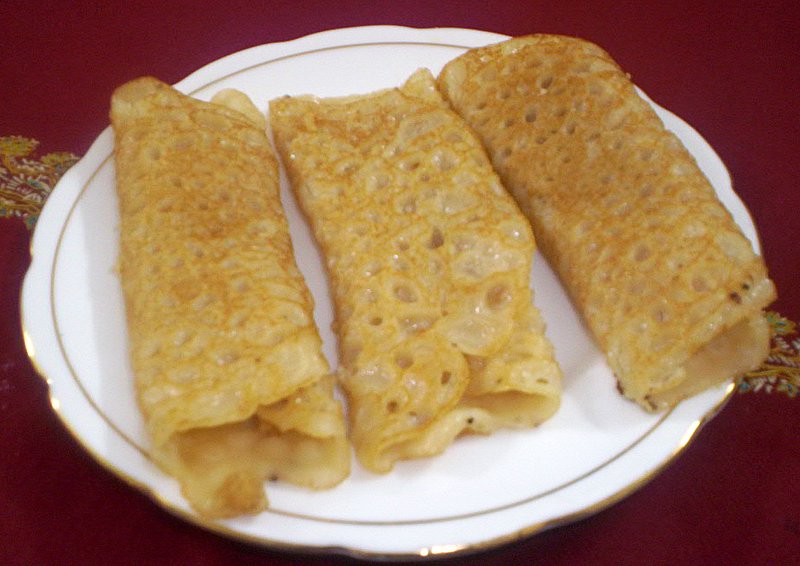
Generally, these pithes are fried (pakan pithe) or steamed (bhapa pithe). Dumplings, called puli pithe also feature among the different varieties, which include muger pulli, dudh pulli and chandrapulli. Another exclusive dessert is the patishapta, which contains sweet kheer as filling.


Some recipes use jaggery, date fruit juice or palm syrup to sweeten these pithas. Often different ingredients and spices like cashew, pistachio, cardamom and camphor are added to top up the flavor. The sweet pitha sometime go additional treatment with milk, in a payesh kind of preparation which is called the dudh pulli. These are probably the most popular sweet with the Bengali's only second that to rasogolla.


Here is a recipe of the Steamed Pitha:


Ingredients:
(10 servings)

# 500 gm rice or freshly pounded rice flour .
100 gm grated coconut
200 gm molasses (patali gur)


Method:


1. Wash and soak rice in 6 cups of water for 60-120 minutes. Drain water and spread rice in the colander, keep for 30 minutes, pound and grind rice to make flour. Sift the rice flour.

2. Assemble one small round bowl of 8 cm diameter, 3 cm deep, a piece of cotton cloth measuring 25 square centimeter, a small but deep saucepan (steamer) with a lid and a strainer that can be fitted on the saucepan.

3. Boil some water in the saucepan placing the strainer on it. Add salt to the rice flour and sprinkle some lukewarm water just to moisten the flour. Sift the flour again.

4. Spread 1 cup of rice flour lightly in the small cup. Place 1 tablespoon molasses at the center. Sprinkle 2 teaspoons coconut over it. Cover the molasses and coconut by spreading another 1 cup of rice flour in the cup. Spread a wet cloth on the cup. Gather the four corners of the cloth with the cup inside. Hold the cloth with the cup tightly keeping the cup upside down.

5. Place the cup with the cloth keeping it upside down in the strainer fitted on the saucepan. Uncover the cup and remove it carefully from the pitha.

6. Gather the corner of the cloth again and cover the pitha with it. Put lid on the saucepan and steam for 2 to 3 minutes.

7. Holding the cloth remove pitha from the strainer. Serve hot pitha at breakfast.


Here is the recipe of Patishapta:
(6 servings)

Ingredients:

180 grams grated fresh coconut
2 cups rice flour
3 tablespoons milk powder
100 gm molasses or sugar
1/4 cup sugar
1 tablespoon ghee


Method:

1. Dissolve molasses or sugar in 2 cups of water. Add rice flour and mix well, batter should be moderately thin. If necessary add a little water. Keep for 2-3 hours.

2. For the filling, mix the entire grated fresh coconut, molasses and the milk powder. Heat 1 tablespoon ghee in a pan and fry the above mixture just for 30-60 seconds and keep it aside.

3. Now, Heat the frying pan, pour in 1/4 cup of batter. Move the pan so that the batter spreads all over it. Reduce heat. When pan cake dries up place I tablespoon prepared filling at one edge.

4. Roll on the pancake. With the back of a serving spoon press the roll lightly. When sticky remove from heat. Serve as a dessert or in the breakfast.


Pithas are usually enjoyed with the sweet syrups of khejurer gur (jaggery made of dates). It is often said that the tradition of pitha is under threat with the burgeoning popularity of fast food. Being able to relish hot scrumptious pithas, while shivering in the early morning chilly mist of the countryside, is a completely different experience.


. . .